
How to Learn Dutch: The Complete Guide (Past the Basics)
Most guides to learning Dutch are written for your first week. Download this app, learn these ten phrases, change your phone to Dutch. That advice is fine, and I will get to it. But it runs out fast, and almost nobody writes the second half: what you actually do once the basics are behind you and you still can't follow the news, your colleagues, or a letter from the gemeente.
I moved to Amsterdam, got to a shaky B1, and then stopped moving for nearly two years. This guide is the map I wish I'd had. It covers the whole road, beginner to the part where it gets hard, and it links out to deeper guides on each piece.
The short answer
The short version: the fastest way to improve your Dutch past the beginner stage is a high, steady volume of real Dutch you can almost understand, news, podcasts, shows, and everyday conversation slightly above your level, done consistently. Not more app drills, and not more grammar. Everything below is how to actually do that.
How long does it take to learn Dutch?
For an English speaker, reaching working fluency in Dutch takes roughly 600 to 750 hours of study. That is the estimate from the US Foreign Service Institute, which groups Dutch in its easiest category for English speakers, alongside Spanish and French. At an hour a day, that is somewhere under two years.
A more useful number for planning: Cambridge English puts a single CEFR level at around 150 to 200 hours of focused study. So getting from B1 to B2, the jump most learners care about, is its own few hundred hours. The reason it feels slower than that is not the hours. It is that most people spend those hours on the wrong thing, which is the next section.
How hard is Dutch to learn?
Dutch is one of the easier languages for an English speaker to learn, because the two are closely related. A lot of vocabulary is recognisable, the grammar has no cases to memorise, and you will read your first simple sentences sooner than you expect.
The catch is the middle. The beginning is friendly and the plateau is brutal, and people mistake the easy start for the whole journey. Word order gets genuinely strange (the verb keeps wandering to the end of the sentence), and in the Netherlands almost everyone switches to English the moment you hesitate, so you stop getting practice exactly when you need it most. The difficulty is not the grammar. It is staying in the language once it stops being fun.
If you are just starting: get the basics in fast
If you are at zero, your only job is to build a small base as quickly as you can: the most common words, the sounds, basic sentence shapes. An app like Duolingo, a beginner course, or a structured YouTube series all do this job well, and it does not much matter which you pick. Pick one and finish the first stretch.
This phase is real and worth doing. I am not going to pretend the app phase is useless, because it gave me the footing to read anything at all. The mistake is staying there. Apps are built to keep you on the app, and they top out around A2, right where the interesting part begins.
The part nobody warns you about: the B1 plateau
The plateau is the point where you can handle a menu, a short chat, and a children's book, but a real news article or a normal conversation still slides past you. This is where most learners quietly stall, and it is almost always because they kept doing beginner activities long after they stopped working.
This is the single most important stretch of the whole journey, so it has its own guide: why you get stuck at B1 in Dutch, and the one thing that breaks it. The rest of this page is, really, the toolkit for getting through it.
The one principle that actually moves you forward
Past the basics, the thing that works is a high volume of input you mostly understand. The linguist Stephen Krashen called it comprehensible input: material just above your current level, where you follow most of it and stretch for the rest. Do enough of that and your brain does the upgrading on its own, without you drilling grammar tables.
"Real content slightly above your level" sounds vague until you make it concrete, so the rest of this guide is the specific formats that deliver it: reading, listening, and watching. Pick the ones that fit your day. The best input is the input you will actually come back to tomorrow.
Read real Dutch news and articles
Reading is the highest-impact habit at the intermediate stage, because text holds still. You can reread a sentence, sit with a word, and follow an argument at your own pace in a way that audio never lets you. The trap is reaching for the English version of the news instead of the Dutch one, which keeps you informed but never moves your Dutch.
The move is to read the real Dutch article, the actual NU.nl or Parool piece, not a dumbed-down "easy news" version that you will outgrow in a month. Here is how to do that as a learner without drowning: how to read real Dutch news when it still feels too hard.
Listen: Dutch podcasts
Listening is the skill the plateau exposes most cruelly, because real speech is fast and gives you no time to look things up. Podcasts made for learners fix that by slowing down and staying near your level, which makes them the easiest way to get daily listening that is hard enough to count but not so hard you quit.
There are a handful that genuinely work at B1, and a few famous ones that will just demoralise you. Here are the ones worth your time, sorted by level: the best Dutch podcasts for learners.
Watch: Dutch TV and films
Watching Dutch TV is great input and a real trap at the same time. It is motivating and it trains your ear, but it is passive, and it is easy to spend an evening reading English subtitles while your Dutch does nothing. The fix is choosing the right shows for your level and watching them the right way.
I went through which series actually work for learners, which to avoid until later, and the subtitle rule that decides whether you learn anything: learn Dutch with TV shows and movies.
The best way to learn Dutch, in one routine
If you want the shortest version of all this, one method instead of the whole map, it comes down to spending most of your time inside real content at your level and treating apps as the warm-up, not the workout. That is the fastest honest route, and it is where most "best way to learn Dutch" advice goes wrong by keeping you in beginner tools too long.
Here is the routine I would hand my past self to skip the wasted year. Keep one of each format in rotation, real Dutch you can almost follow: a news article you would have read in English, a learner podcast for the commute, an episode with Dutch subtitles in the evening. Let the app be the ten-minute warm-up, not the session. Do that most days, at a level where you catch most of it and reach for the rest, and your Dutch moves. That is the whole method, and everything above is just how to make each piece easier to keep up.
How to keep it going while you live in the Netherlands
The hardest part of learning Dutch in the Netherlands is not the language. It is that you do not need it. Your job is in English, your friends switch to English, and the city runs fine without it, so Dutch becomes the thing you will get to later. Later never comes on its own.
What works is weaving small amounts of real Dutch into the day you already have, rather than scheduling a class you will cancel. Read the Dutch headline before the English one. Keep one Dutch podcast in the rotation. Let the gemeente letter be reading practice instead of a Google Translate job. The point is consistency you can survive, not intensity you cannot.
Do you need a course or inburgering?
A course or a tutor is genuinely useful for two things that self-study is bad at: speaking out loud with correction, and the discipline of a fixed schedule. If those are your weak points, pay for them, and keep doing the input work alongside. They are not in competition. Picking which course is its own rabbit hole, and not one this guide is qualified to settle. All Language Resources has worked through twenty Dutch online courses and ranked them, which is a better starting point than any list I could improvise here.
And to be clear about one thing self-study cannot replace: if you need to pass the inburgering exam or the NT2 state exam for residency or citizenship, that is a formal requirement with its own preparation, and a guide like this is not a substitute for it. Use the official materials for the exam. Use everything on this page to build the actual language underneath it.
Where Verbally fits
Everything above points the same way: get a lot of real Dutch you can almost understand, and do it consistently. The honest problem is that "real Dutch" is usually too hard right when you need it most, so you bounce off it and go back to English.
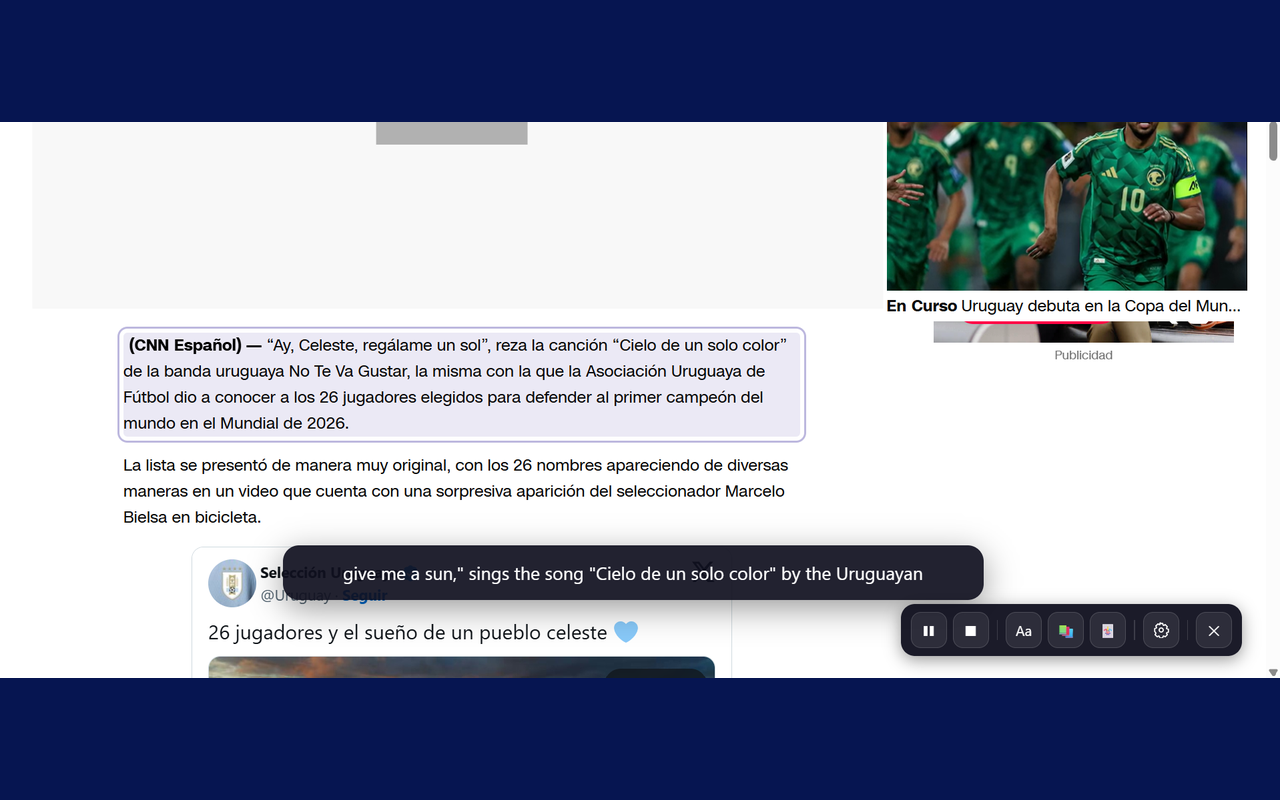
That gap is the reason I built Verbally. It reads any Dutch web page aloud in Dutch while showing you translated captions in sync, so you can listen to the real article and read along in English when you lose the thread. It turns the news you would have skipped into reading and listening practice, on the page you are already on. It is one way to do the input this whole guide is about, not a replacement for any of it.
Try Verbally free and turn any Dutch page into read-along audio →