
The Best Dutch Podcasts for Learners, and How to Actually Understand Them
I spent a lot of my first year in Amsterdam with a Dutch podcast playing in my ears on the tram, feeling like I was doing something useful. Mostly I was not. The beginner shows were so slow I drifted off. The real ones moved too fast, and the moment I lost one word I lost the whole sentence, then the whole episode. I would get off the tram with no idea what I had just listened to.
If that sounds familiar, this is the guide I wish I had. Here are the Dutch podcasts actually worth your commute, sorted by level, and then the one fix that finally made listening stick for me.
The short answer
The best Dutch podcast depends on your level. Beginners do well with slow, scripted shows like Zeg het in het Nederlands or Learn Dutch with Lianne. Intermediate learners around B1 need authentic, conversational Dutch like Een Beetje Nederlands or Easy Dutch. The thing that decides whether a podcast helps at all is whether you can pair the listening with text you can read along, so that one missed word does not cost you the whole thread.
Why podcasts are the lowest-effort way to keep your Dutch alive
A podcast is the rare bit of language practice that fits into time you were going to waste anyway. The commute, the dishes, the walk to the supermarket. You do not have to book a class, open an app, or sit at a desk. You press play.
That matters more than it sounds. The hardest part of learning a language as a busy adult is not the grammar, it is showing up every day. Anything you can attach to a habit you already have will beat the perfect method you never start. For me, "Dutch goes on when the headphones go on" was the only routine that survived a real work week.
The catch is that audio alone is the hardest kind of input to follow. You cannot slow it down in your head, you cannot see where one word ends and the next begins, and there is no safety net when you fall behind. So the trick is picking a show at the right level, and giving yourself a way to read along. More on that below.
Best Dutch podcasts for beginners (A1 to A2)
If you are still in your first year of Dutch, you want shows that are slow, scripted, and built for learners. Authentic native Dutch will just wash over you at this stage, and that is discouraging, not useful.
The honest goal at this level is not comprehension of everything. It is getting your ear used to the rhythm and sound of Dutch, and picking up high-frequency words you will then start to notice everywhere.
Best Dutch podcasts for intermediate learners (B1 and up)
Once you are around B1, learner-only podcasts start to feel like baby talk, and you are ready for slower authentic Dutch. This is the level where most expats get stuck, so it is worth getting the choice right.
A simple rule: if you understand almost everything, the show is too easy and you have outgrown it. If you understand almost nothing, drop a level. You want the show where you catch most of it and have to reach for the rest. That "slightly above your current level" zone is what the linguist Stephen Krashen called comprehensible input, the idea that we make progress on language we can almost but not quite follow.
Where slow Dutch news podcasts fall short
A lot of intermediate expats want one specific thing: to keep up with the actual Dutch news, in Dutch, at a speed they can handle. It is the most motivating content there is, because it is about the place you live.
The honest answer is that there is no perfect slow-news podcast in Dutch. Shows like Easy Dutch touch on current topics, and slow-Dutch series exist on YouTube, but none of them is a daily, learner-paced version of the news you actually care about. The real news podcasts, like the NOS bulletins, are made for native speakers and run at full native speed.
So the content most likely to keep you coming back is also the content no learner podcast really serves. That gap is exactly the problem the next section is about.
The real problem with podcasts at B1
Podcasts have three limits that hit hardest right at the intermediate plateau, and naming them is the first step to fixing them.
They move at one speed, and it is not yours. When you miss a word, the audio keeps going. By the time you have worked out what gewoon meant, you have missed the next three sentences. With no text in front of you, one gap becomes a cascade.
You cannot choose the topic. You are stuck with whatever the show decided to make. The article you genuinely want to read, about the housing crisis on your own street or the thing your colleagues were laughing about, is never the episode on offer.
Audio-only is the hardest mode to learn from. This is not just a feeling. In a study published in the journal System, the researcher Anna Chang found that L2 listeners who read along while listening understood short stories noticeably better than those who only listened. Later research has shown the benefit is real but uneven, depending on your reading and listening level, so it is not magic. But the direction is clear: seeing the words while you hear them gives you an anchor that audio alone does not.
That anchor is the whole game. Listening teaches you the sound. Reading teaches you the shape of the words. Doing both at once lets you connect them, and stops one unknown word from sinking the entire sentence.
The fix: turn any Dutch content into audio you can read along with
Here is what finally worked for me, and it is less about a specific podcast and more about a method: listen and read at the same time, on the content you actually want.
The pieces are simple. Pick something in Dutch you genuinely care about, ideally real and current. Play it as audio so you train your ear. And keep the text visible so that when you lose the thread, you can glance down, find your place, and carry on instead of giving up.
This is the gap I built Verbally to fill. It reads any Dutch web page aloud in real Dutch, and shows translated English captions in sync as it goes. So you can take the actual NU.nl article about your neighbourhood, or a Dutch news story you actually want to read, and turn it into your own private podcast, with a safety net you can read the second you fall behind. The Dutch audio stays the main signal, the English is just there to catch you. It is the read-while-listening setup the research points to, except on whatever you choose instead of whatever a show happened to publish.
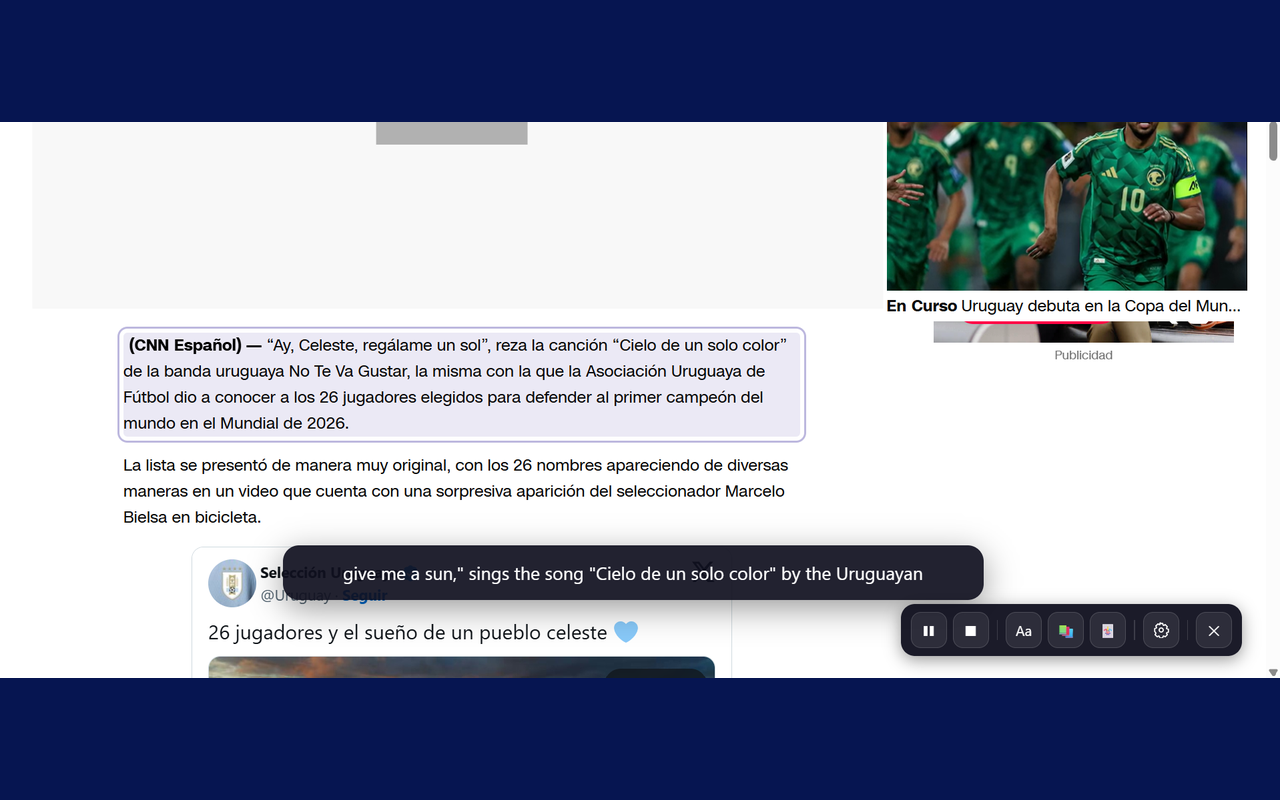
Podcasts are still worth it, especially the ones above for getting your ear in. But once you want to follow the real, specific Dutch content in your life, the podcast format runs out of road, and reading along is what takes you the rest of the way.
How to build a ten-minute daily Dutch listening habit
You do not need an hour. You need ten minutes you repeat. Here is the routine I would give my year-one self.
- Attach it to something you already do. The commute, the morning coffee, the dog walk. Same trigger every day, so you never have to decide.
- Start at the level where you catch most of it. Pick one show from the right list above. Comprehension builds confidence, and confidence is what gets you back tomorrow.
- Read along whenever you can. Use a podcast that offers transcripts, like Een Beetje Nederlands, or turn the Dutch content you actually want into read-along audio so the text is always there.
- Re-listen to the same thing once. The second pass is where the words you half-caught the first time lock in. New material every day feels productive but teaches less.
- Let it be short and boring-consistent. Ten honest minutes a day beats a two-hour binge once a fortnight, every time.
The plateau does not break because you found the perfect podcast. It breaks because you finally found a way to spend real time inside Dutch you can understand, every day, without it being a chore.
Try Verbally free and turn any Dutch page into read-along audio →